Grid Locked
Why AI's Power Problem Is Actually a Grid Problem
Everyone is talking about how much compute AI needs, but almost nobody is talking about the grid underneath it. That's the part that's actually going to break first.
It's Not How Much Power, It's When
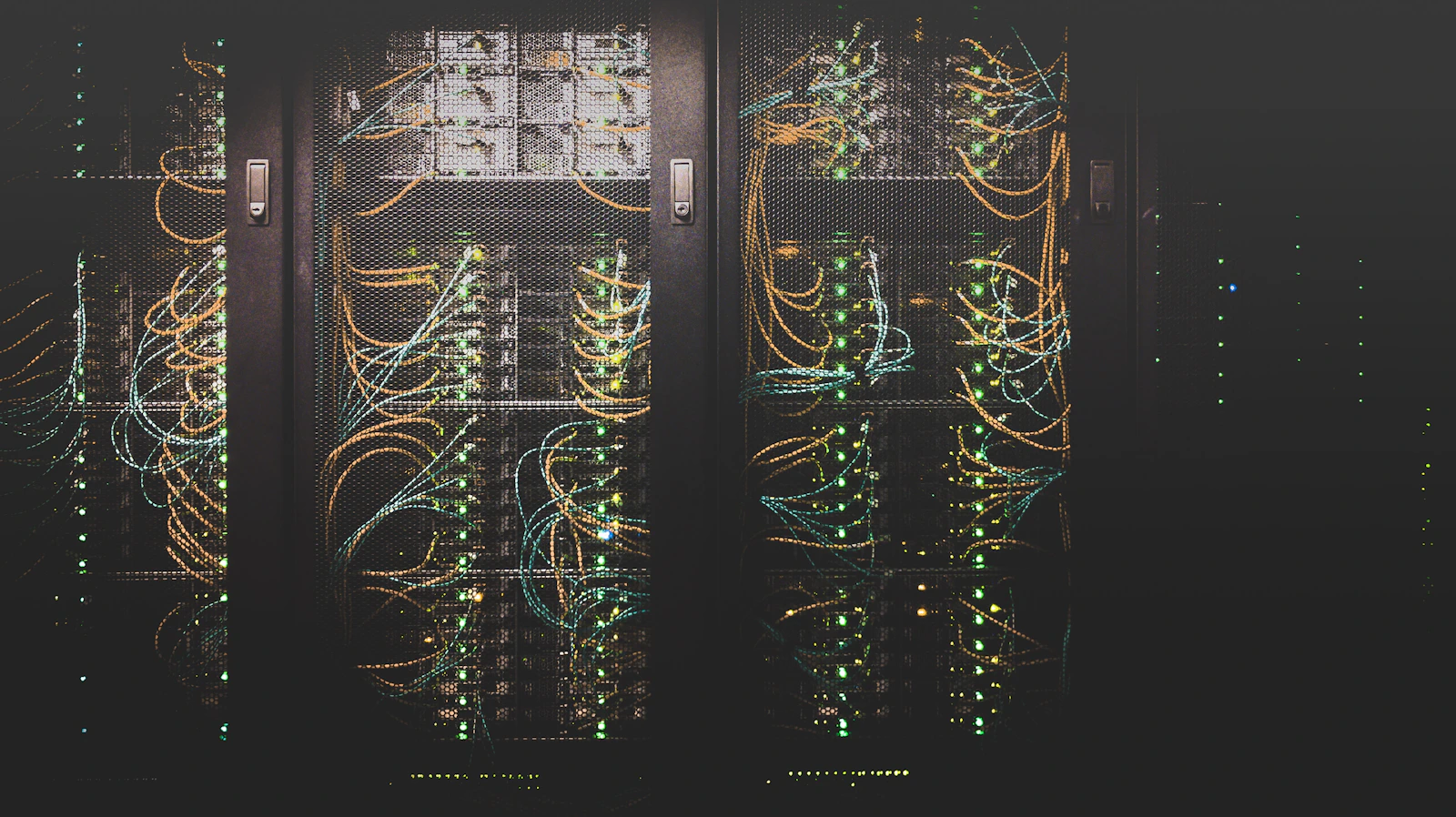
From an outside standpoint, it’s easy to associate data centers with the many environmental problems that have grown as a result of the Industrial Revolution, but the consequences of both vary significantly. The problem isn’t that AI is using a lot of power. It’s that when the power gets pulled grids can’t keep up. Building new power lines and transmission capacity takes five to seven years, yet new AI data centers are being proposed and built within a month. Those two timelines don't match, and that mismatch is the real bottleneck. A grid that can't expand fast enough is going to feel that strain the hardest during peak demand. That's why datacenter engineers are adopting what's called grid flexibility. This approach uses on-site storage, load shifting, and local power generation to save time while waiting for new transmission lines to be built. Instead of a data center being a fixed electricity hog that just takes whatever it needs whenever it needs it, it becomes something closer to a participant in the grid, a building that can adjust when and how it draws power. I wanted to see how that idea actually plays out with real numbers, so I built a virtual model to test it.

The Project: Is a Battery Actually Worth It?
The question I set out to answer was simple: for a 20 megawatt data center in Texas, does installing a large battery, a solution many believe will reduce the carbon footprint, make financial and environmental sense? To answer that, I used a model that tracks the data center's electricity use hour by hour rather than just adding up a yearly total, since it's the hour-to-hour swings that actually strain the grid. It also tracks how clean or dirty the power is at each hour, since that changes depending on whether Texas is running mostly wind, solar, gas, or coal at that moment. Together, it all runs on real public data from 2025. And what it said about the battery surprised me. The battery breaks even at around $183 for every kilowatt-hour of storage it has, before taxes. After federal tax credits and depreciation benefits, that number rises to about $252 per kilowatt-hour, meaning the battery can cost more and still be worth building. That part lined up with what I expected. However, when I ran real 2025 Texas electricity prices through the model, the battery only ended up saving about $27,000 a year, far below the $100,000 a year the breakeven math had assumed going in. And the carbon savings were almost nothing, about 17 tonnes out of 56,500 tonnes total, which is a 0.03% cut. A battery like this makes money the same way a savings account does. It buys power when it's cheap and uses it when power would otherwise be expensive. The problem is that cheap and clean aren't the same hours. Overnight wind power tends to be cheap and clean at the same time, sure, but plenty of cheap hours come from an oversupplied grid running whatever's easiest to turn on, not necessarily the cleanest source. So a battery built purely to save money ends up barely touching emissions, because it was never optimizing for clean power in the first place, just cheap power. That's the insight that ties the whole project together. A battery here is a money play, not a carbon play. And even the money side only works because of tax incentives and revenue the model doesn't fully capture. Real battery projects make a lot of their income from being paid just to stand ready for the grid, not from buying and selling power, which this model doesn't include either.
Where This Goes
I think we're heading toward a future where data center operators stop acting like pure electricity customers and start acting more like energy companies themselves, building their own generation, storage, and small local grids, because waiting on new transmission lines simply isn't an option anymore. This is also personally why the overlap between power systems and AI infrastructure has pulled me in as an ECE student. Everyone's excited about the chips and the compute, but the grid is where the actual constraint lives. It's a far more interesting problem than people give it credit for. The number I opened with, 42 gigawatts and climbing, isn’t going to slow down because someone finds a smarter battery. It’s going to take a grid that can actually keep pace, and that’s a harder problem than most people building AI infrastructure right now want to admit. My model answered one narrow question about one battery at one facility, and even that came with a catch. Scale that uncertainty up to an entire industry racing to build faster than the grid can follow, and it’s clear why this is the part of the AI story that deserves a lot more attention than it’s getting.
Sources & Data
Reporting and public datasets used to frame the article and build the model.
Data center power demand
- S&P Global Commodity Insights, “Data center grid-power demand to rise 22% in 2025, nearly triple by 2030”, October 14, 2025.
- U.S. Department of Energy, “DOE Releases New Report Evaluating Increase in Electricity Demand from Data Centers”, December 2024.
- Environmental and Energy Study Institute, “Data Center Energy Needs Could Upend Power Grids and Threaten the Climate.”
AI energy use
- Reuters interview with Alphabet Chairman John Hennessy, 2023, for the widely cited comparison between AI queries and traditional web searches.
- Epoch AI, “How much energy does ChatGPT use?”
Project data sources
- U.S. Energy Information Administration API, hourly Texas generation by fuel type.
- ERCOT, hourly day-ahead electricity prices using the HB_HUBAVG hub.
- U.S. EPA eGRID, regional emission factors used to validate the model's carbon output.